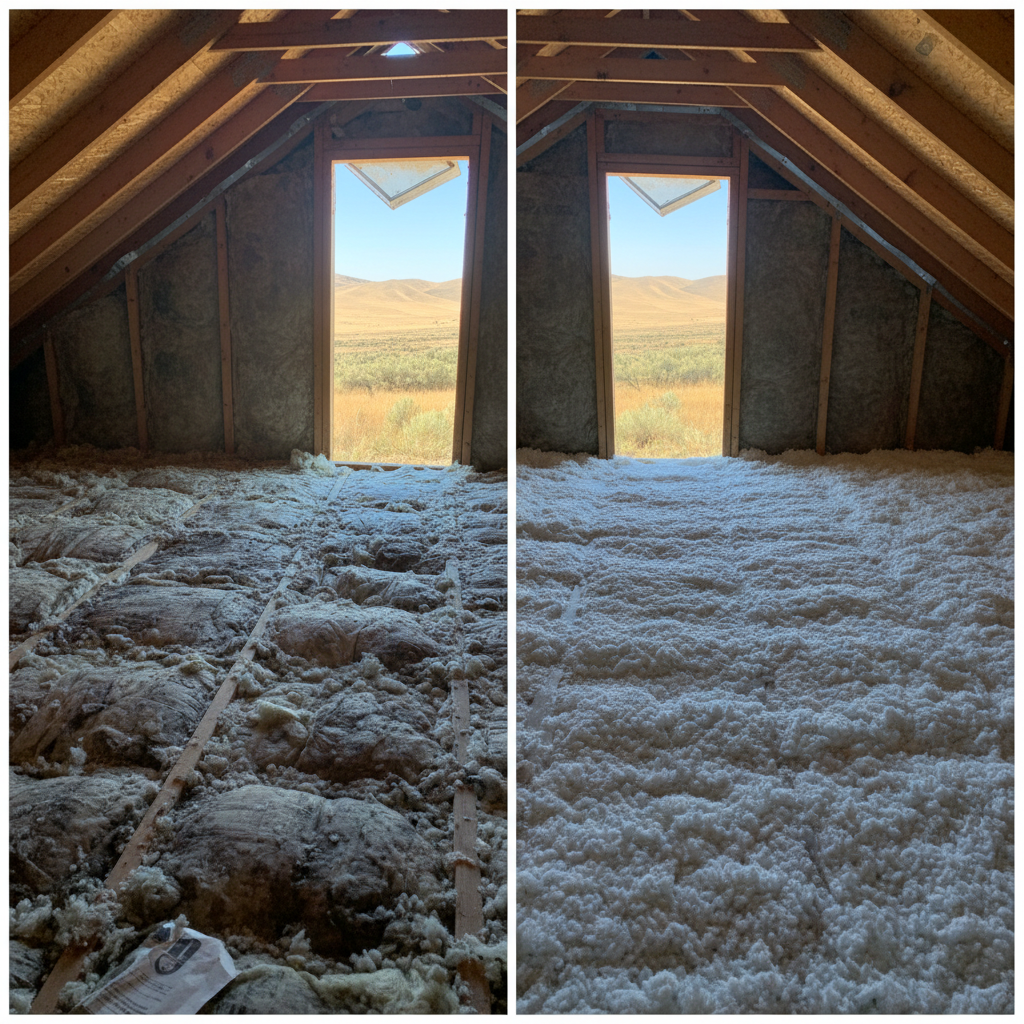
Alright, let's talk insulation. Specifically, the blown-in kind. When you're looking to upgrade your attic or fill those tricky wall cavities, blown-in is usually the way to go. But then you hit the next question, don't you? Cellulose or fiberglass? It's a common one I get from folks all over Eagle, whether they're in a newer build out in Mace River Ranch or an older place closer to downtown.
Both are good options, don't get me wrong. They'll both make your home more comfortable and save you money on energy bills. But they're not identical, and knowing the differences can really help you pick what's best for your situation. I've worked with both for years, and here's what I tell my customers.
So, What's the Deal with Cellulose?
Cellulose insulation is mostly recycled paper products—think old newspapers, cardboard, that sort of thing. We treat it with chemicals to make it fire-resistant and to deter pests like rodents and insects. When we blow it in, it forms a dense, packed layer.
Pros of Cellulose:
- Density: This is a big one. Because it's so dense, cellulose is really good at stopping airflow. That means less heat escaping in winter and less heat getting in during our scorching Eagle summers. It also helps a bit with sound dampening, which is a nice bonus if you live near a busy road, right?
- Eco-Friendly: If you're into green building or just want to reduce your carbon footprint, cellulose is a winner. It's made from recycled materials, so it's a pretty sustainable choice.
- Fire Resistance: The chemical treatments make it quite fire-resistant. It actually chars rather than burning quickly, which can slow down the spread of a fire.
- Pest Deterrent: Those same treatments that make it fire-resistant also make it unappealing to pests. They just don't like to nest in it.
Cons of Cellulose:
- Moisture Absorption: This is its main weakness. If cellulose gets wet and stays wet, it can lose its insulating properties, settle, and even promote mold growth. Now, this isn't usually an issue in a dry attic, but if you have a leaky roof, it's definitely something to consider.
- Dust: Installation can be a bit dusty. We always take precautions, but it's something to be aware of.
- Weight: It's heavier than fiberglass. Most attics can handle it just fine, but in some rare cases, if you have an older home with questionable ceiling joists, we'll double-check that.
And What About Fiberglass?
Fiberglass insulation, on the other hand, is made from tiny glass fibers. It's often made from recycled glass, too, so it's got some green cred. Blown-in fiberglass looks a bit like cotton candy, light and fluffy.
Pros of Fiberglass:
- Moisture Resistance: Fiberglass doesn't absorb moisture like cellulose. If it gets wet, it'll dry out without losing its R-value or promoting mold—assuming, of course, that you fix the source of the leak. This is a big plus in areas prone to dampness, though our attics in Eagle are usually pretty dry.
- Lightweight: It's much lighter than cellulose, which is good for older homes or structures where weight might be a concern.
- Non-Combustible: Fiberglass itself is naturally non-combustible.
- Pest Resistant: Pests generally don't like fiberglass either because the tiny glass fibers are irritating.
Cons of Fiberglass:
- Airflow: Because it's less dense, fiberglass can be a bit more susceptible to air movement. This can reduce its effective R-value, especially in very windy conditions or if there are drafts in the attic.
- Installation Irritation: Those tiny glass fibers can be irritating to skin, eyes, and lungs during installation. We always wear proper PPE, but it's not something you want to mess with without protection.
- Settling: Over time, fiberglass can settle a bit, especially if it's not installed to the correct density. This means you might lose a little R-value over the decades.
Cost, Durability, Maintenance, and Appearance
Let's break down those practical points:
- Cost: Generally, the upfront cost for cellulose and fiberglass blown-in insulation is pretty comparable. Prices can fluctuate based on material availability and installation complexity, but you won't see a massive difference between the two for the same R-value.
- Durability: Both are durable if installed correctly. Cellulose, with its density, holds its R-value well over time unless it gets wet. Fiberglass is also long-lasting, though as I mentioned, it can settle a bit more. For our dry climate here in Eagle, both hold up great.
- Maintenance: Once it's in, there's really no ongoing maintenance for either. Just make sure your attic is sealed up tight and you don't have any roof leaks.
- Appearance: Honestly, once it's blown in, you'll see a thick, uniform layer covering your attic floor. Cellulose is usually a grayish color, and fiberglass is typically white or pink. Neither is winning any beauty contests, but they're not meant to. They're there to do a job.
My Recommendation for Eagle Homes
Given our climate here in Eagle, Idaho—hot, dry summers and cold winters—both cellulose and fiberglass are solid choices. We don't typically deal with the extreme humidity or constant moisture issues that some other parts of the country do. So, the moisture absorption concern with cellulose isn't as big of a deal here, provided your roof is in good shape.
For most homeowners in Eagle, I lean slightly towards blown-in cellulose. Why? That density. It just does a fantastic job of air sealing and thermal performance, which is crucial for keeping those heating and cooling bills down when temperatures swing wildly. The pest deterrent quality is also a nice bonus, especially if you've got an older home. It just creates a really snug, efficient envelope.
That said, if you've had a history of roof leaks, or your attic has some unique ventilation challenges, fiberglass might be the safer bet because it resists moisture better. It really depends on your specific home and its needs.
The important thing is to get enough insulation. Whether it's cellulose or fiberglass, making sure you hit those recommended R-values for our climate zone is what's going to make the biggest difference in your comfort and energy savings. We're talking R-49 to R-60 for attics around here. If you're not sure what you've got, give us a call at Aim High Insulation. We can come out, take a look, and give you an honest assessment of what'll work best for your place. We've helped plenty of your neighbors make the right choice, and we'd be happy to help you too.