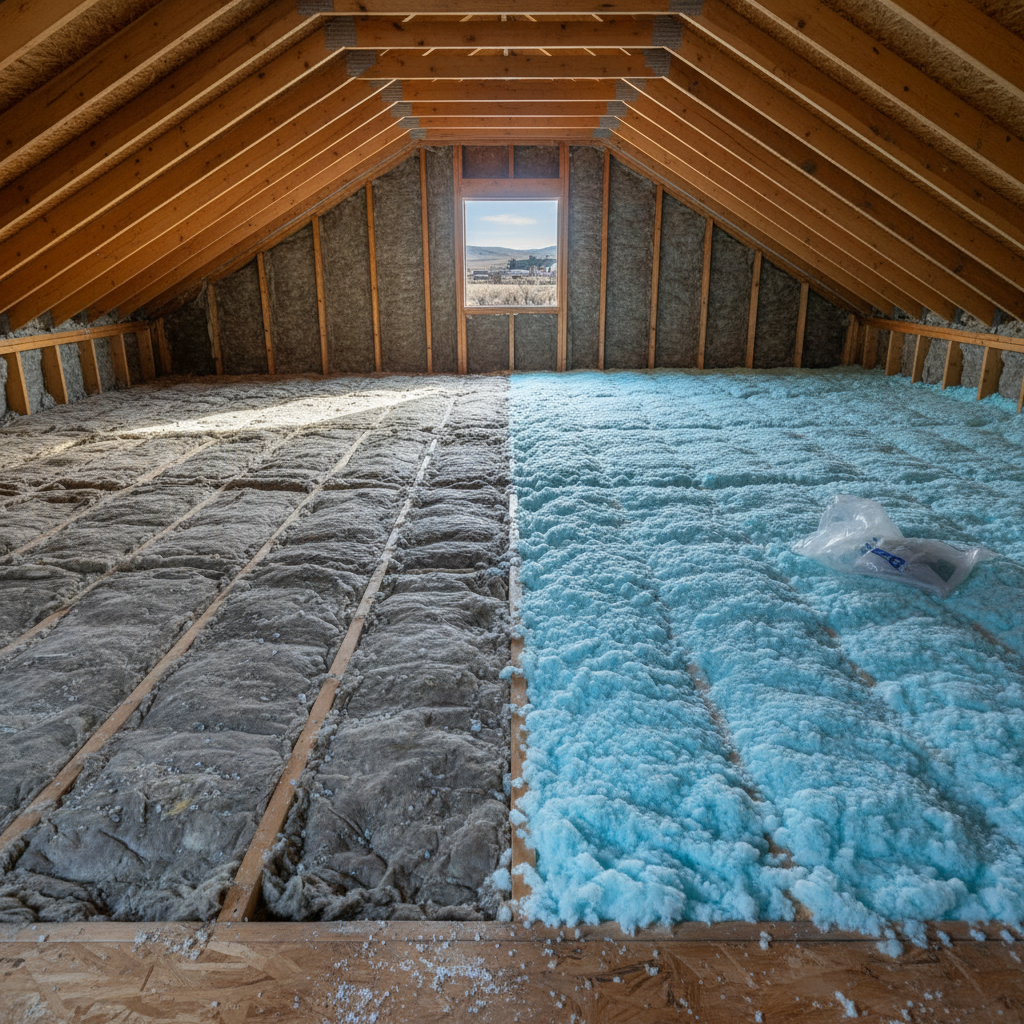
Alright, let's talk attic insulation. If you're looking to upgrade your home's comfort and cut down those energy bills, you've probably heard of two main types: blown-in and batts. Homeowners around Eagle often ask me which one's better, and honestly, it's not always a simple answer. But I'll tell you what I've seen work best for our climate and homes.
What Are We Talking About?
First, a quick rundown so we're on the same page. When I say 'batts,' I'm talking about those pre-cut rolls or sheets of insulation, usually fiberglass or mineral wool. They look like big blankets. 'Blown-in' insulation, on the other hand, is loose-fill material, often cellulose (recycled paper) or fiberglass, that we literally blow into your attic with a big hose. It looks like a fluffy, even layer of snow.
Cost: Upfront Investment
Let's get right to the money. Generally speaking, blown-in insulation tends to be a bit more expensive per square foot to install. Why? Well, the material itself can sometimes cost a little more, and the specialized equipment and labor needed to blow it in properly add to the price. Batts are often seen as the DIY-friendly option, so if you're doing it yourself, you might save on labor. But if you're hiring a professional like us at Aim High Insulation, the labor cost for batts can actually be higher because it's more time-consuming to cut and fit them perfectly around every joist, wire, and pipe.
For a typical 2,000 square foot attic in Eagle, you're probably looking at a few thousand dollars for either option, but blown-in might be on the higher end of that range. Don't just look at the sticker price though; think about the long-term value.
Durability and Performance: What Lasts and Works
This is where things get interesting, especially for our Idaho weather. Batts, if they're installed perfectly, can perform really well. The problem is, 'perfectly' is tough to achieve. Any gaps, compressions, or areas where they're not cut just right around obstructions like electrical boxes or plumbing vents, and you've got air leaks. Those gaps are like tiny holes in your home's thermal envelope, letting heat escape in winter and sneak in during summer.
Blown-in insulation, because it's loose, fills all those nooks and crannies. It creates a seamless blanket of insulation that's much better at preventing air leakage. This is a huge deal here in Eagle, where we get those freezing winters and scorching summers. You want every bit of R-value working for you. Blown-in also tends to settle less over time compared to some batt types, maintaining its R-value better for longer. I've seen old batts in homes near the Eagle Hills Golf Course that are so compressed and shifted, they're barely doing anything.
Maintenance and Appearance
Maintenance? For insulation? Not really. Once it's in, it's pretty much set and forget. You shouldn't be messing with it much. If you have to go into your attic for something else, like running new wiring, you'll find blown-in a bit messier to deal with. You'll have to rake it back, do your work, and then spread it back out. Batts are easier to lift and replace if you need access underneath.
As for appearance, who cares? It's your attic! No one's going to see it. But if you're curious, batts look neat and tidy if installed well. Blown-in looks like a big, fluffy, even layer. Both are fine. What matters is what's happening to your energy bill.
My Recommendation for Eagle, ID Homes
Given our climate – the cold winters, the hot summers, and the need for a really tight thermal envelope – I almost always recommend blown-in insulation for attics. Here's why:
- Superior Coverage: It gets into every void, around every pipe and wire, creating a much more effective barrier against heat transfer. This is crucial for keeping your home comfortable and efficient.
- Better Air Sealing: While insulation isn't an air seal itself, blown-in material helps reduce air movement through the ceiling much more effectively than batts, especially when combined with proper air sealing techniques around penetrations.
- Consistent R-Value: You get a more uniform R-value across your entire attic floor, meaning fewer cold spots in winter and hot spots in summer.
- Faster Installation: For professionals, blowing in insulation is usually quicker than precisely cutting and fitting hundreds of batt pieces. This can sometimes offset the higher material cost.
Now, don't get me wrong, batts aren't bad. If you've got a super simple attic with no obstructions and you're meticulous about cutting and fitting, they can work. But most attics aren't that simple. For the best bang for your buck in terms of long-term energy savings and comfort, especially in a place like Eagle where we experience significant temperature swings, blown-in insulation is usually the smarter choice. It's an investment that pays you back every month on your utility bill.