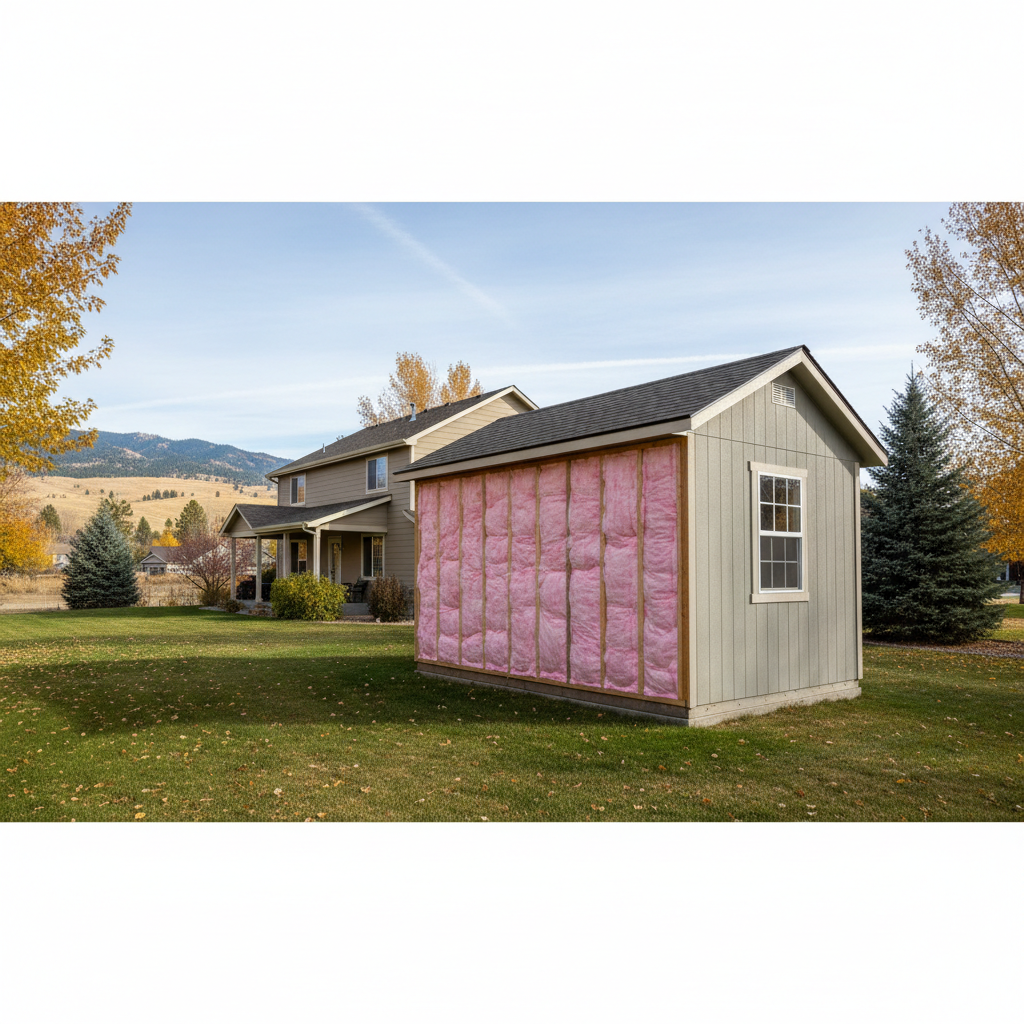
That shed out back isn't just for dusty old lawnmowers and forgotten tools, is it? Not for most folks around Eagle, anyway. I've seen everything from full-blown woodworking shops to art studios, home offices, and even cozy 'she-sheds' tucked away in backyards all over town. You see them everywhere, from the older homes near State Street to the newer developments out by Two Rivers.
But here's the kicker: if you actually want to *use* that space comfortably, especially with our hot summers and chilly winters, you gotta insulate it. Otherwise, it's just a glorified oven or freezer, depending on the season. Pretty useless, wouldn't you say?
Why Insulate Your Shed in Eagle?
It's pretty simple, really. Our climate here in Eagle, ID, isn't exactly mild. We get those scorching 90-degree days in July and August, then the mercury dips well below freezing for weeks on end in January. Without insulation, your shed is going to feel every bit of that temperature swing.
- Comfort: This is the big one. If you're spending any real time in there—tinkering with projects or just escaping for a quiet moment—you want it to feel good. Insulation keeps the heat out in summer and holds it in during winter.
- Protect Your Stuff: Think about what you're storing. Sensitive electronics, paints, glues, even some tools don't do well with extreme temperature changes. Insulation helps stabilize the internal environment, protecting your investments.
- Energy Efficiency (if heated/cooled): Running a space heater or a small AC unit in there? Then insulation is non-negotiable. You'll just be throwing money out the window trying to condition an uninsulated space.
- Pest Control: A well-sealed and insulated shed is harder for pests to get into. Fewer gaps mean fewer entry points.
What Kind of Insulation Works Best for Sheds?
When we talk about sheds, we're usually not dealing with the same construction as your main house. Walls might be thinner, and framing could be different. That means the insulation approach needs to be smart.
For most sheds, you've got a few solid options:
- Fiberglass Batts: This is a common choice. It's relatively inexpensive and easy to install if you have standard stud spacing. You'll want to make sure you get the right R-value for our climate zone. For walls, R-13 or R-15 is usually a good target. For the ceiling, you might go a bit higher if you have the space.
- Rigid Foam Boards: Products like XPS (extruded polystyrene) or polyisocyanurate are great for sheds. They offer good R-value per inch, are easy to cut and fit, and don't absorb moisture like some other materials. They're particularly good if your shed has non-standard framing, or if you want to add insulation to the exterior walls before siding goes on.
- Spray Foam (DIY cans or professional): For smaller areas or sealing up tricky gaps, canned spray foam is excellent. For a whole shed, you could consider professional closed-cell spray foam, which offers fantastic R-value, acts as an air barrier, and adds structural rigidity. It's more of an investment, sure, but it's a top-tier solution, especially if you're planning on heating or cooling the space regularly. We do plenty of these kinds of projects at Aim High Insulation.
One thing I always tell folks: don't forget the floor! If your shed is built on skids or a concrete slab, you'll still get cold seeping up from the ground. Adding rigid foam under the subfloor or even insulating the perimeter of the slab can make a huge difference.
Local Considerations for Your Eagle Shed
Eagle's got some unique characteristics that play into this. For instance, the soil around here, especially in areas like Legacy or Starwood, can be pretty expansive clay. This means you need to be extra careful about moisture management around your shed's foundation. Good drainage and proper sealing are key before you even think about insulation.
Also, think about what you're using the shed for. If it's a workshop with power tools, you'll want to make sure any insulation isn't going to interfere with electrical outlets or ventilation. If it's a potting shed, you might need to consider moisture-resistant insulation more carefully.
I've seen some folks try to cut corners, just slapping up some thin foam board and calling it good. And yeah, it's better than nothing, but it won't give you the year-round comfort you're probably hoping for. Doing it right the first time saves you headaches and money down the road.
If you're in Eagle and thinking about making your shed a truly functional space, give us a call. We can walk you through the best options for your specific shed and how you plan to use it. It's not just about stuffing insulation in; it's about creating a comfortable, efficient space that works for you.