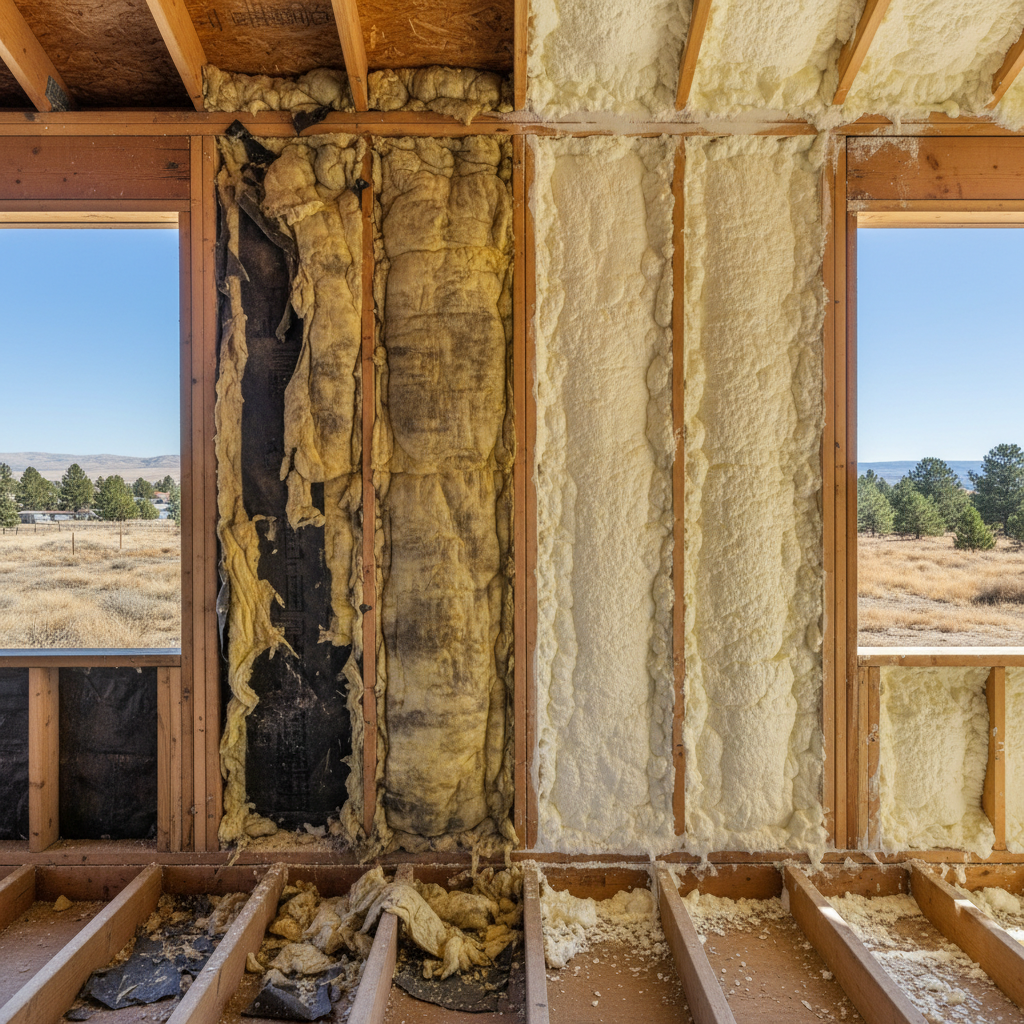
Alright, so you're probably thinking about open-cell spray foam for your place here in Eagle. Smart move, truly. It's awesome for sealing up air leaks and making your home feel way more comfortable. But when we talk open-cell, we usually have two main ways of doing things: 'flash and batt' or 'full fill'. Homeowners often ask me which one's better, and honestly, it really depends on what you're trying to achieve and, of course, your budget. Let's dig into it.
Flash and Batt: The Hybrid Approach
Flash and batt is pretty much what it sounds like. We spray a thin layer of open-cell foam, usually somewhere around 1 to 2 inches thick, right onto the sheathing. This thin layer does an amazing job of sealing everything up tight. Think of it as your main air barrier. Once that's all cured, we come back and fill the rest of the cavity with traditional batt insulation, stuff like fiberglass or mineral wool. So, you get the air-sealing perks of spray foam combined with the R-value you get from batt insulation.
Cost
Generally speaking, flash and batt is the more budget-friendly choice upfront. You're simply using less spray foam, which, board foot for board foot, is the pricier material. The batt insulation takes up most of the cavity, which helps bring the overall material cost down. It's a solid way to get many of the benefits of spray foam without completely emptying your wallet.
Durability & Maintenance
The foam itself is super durable; it's not going anywhere once it's set. And the batt insulation behind it holds up pretty well too. Maintenance is minimal – once it's in, that's it. You really don't need to do anything else to it. The key thing is just making sure we install it right the first time, especially that continuous, sealed foam layer.
Appearance
You won't actually see this once the drywall goes up, so how it looks isn't usually a big deal. If you happen to catch a glimpse before the drywall, you'll see that thin foam layer, then the fluffy batt insulation filling the rest of the space.
Full Fill: Maxing Out the Foam
With full fill, we're doing exactly that: filling the entire stud cavity with open-cell spray foam. If you've got 2x6 walls, we're putting 5.5 inches of foam in there. This gives you one continuous, solid layer of insulation and air sealing. No gaps, almost no thermal bridging through studs, and no other materials mixed in.
Cost
This is usually the more expensive choice. You're using a lot more spray foam, and even though open-cell costs less than closed-cell, it still adds up when you're filling entire wall cavities. However, you do get a higher R-value per inch compared to batts, and the air sealing is absolutely top-notch.
Durability & Maintenance
Full-fill open-cell foam is incredibly durable. It sticks to everything, creates a completely sealed barrier, and won't ever settle or sag over time like some batt insulations can. It's also permeable, meaning it can handle some moisture without trapping it, which is a huge plus in our climate. We get some pretty wild temperature swings and condensation issues here, especially with older homes in places like Legacy or Starwood that might not have perfect vapor barriers. Maintenance? Zero. It's a set-it-and-forget-it kind of solution.
Appearance
Again, the drywall usually hides this. But if you see it beforehand, it's a soft, continuous, usually light-colored foam that completely fills the cavity, often trimmed flush with the studs.
Which One Should You Pick for Your Eagle Home?
Look, both options are a huge step up from just traditional batts. They both seal air really well, which is super important for saving energy and staying comfortable. But for most homeowners right here in Eagle, especially with our hot summers and cold winters, I tend to lean towards full-fill open-cell spray foam if your budget can swing it.
Here's why:
- Superior Air Sealing: Flash and batt is good, sure, but full fill is exceptional. It pretty much stops all air leakage through the wall cavity, meaning fewer drafts and a more consistent temperature inside, no matter what the weather's doing outdoors.
- Higher Performance: You get a higher effective R-value with full fill because the whole cavity is packed with an insulating and air-sealing material. There are no thermal bypasses sneaking around the batts.
- Moisture Management: Open-cell foam lets vapor pass through it. This is really, really important in our climate. If any moisture gets into the wall cavity (maybe from a tiny leak or some condensation), the open-cell foam lets it dry out. That cuts down on the risk of mold or rot. It won't trap moisture like some impermeable barriers can, which is a relief, right?
- Sound Dampening: Full-fill open-cell foam is fantastic at soaking up sound. If you're building near a busy road or just want a quieter home, this is a big bonus.
Flash and batt is a perfectly good choice if you're trying to balance cost with performance. It's a big improvement over just using batts. But if you want the absolute best performance, the most comfortable home, and that feeling of security that comes with a truly superior insulation and air barrier system, full fill is definitely the way to go. It's an investment, yes, but one that pays off in lower energy bills and a much more enjoyable living space.
At Aim High Insulation, we've done plenty of both. We can walk you through the specifics for your home and help you figure out what makes the most sense for your project and budget. Don't hesitate to give us a call.